
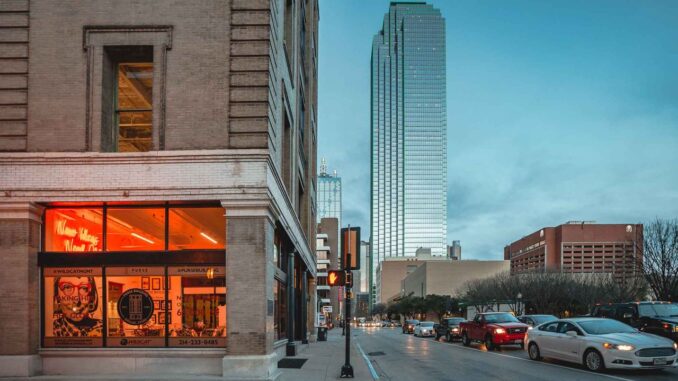
The outlook for Dallas is hot for 2026 with momentum shifting in meaningful ways. Institutional investors are increasingly focusing on Downtown Dallas—not as a recovery story, but as a city moving into a new phase of long-term structural growth. With multi-billion-dollar redevelopment advancing, global visibility accelerating and financial infrastructure deepening, investors are looking closely at assets positioned near the center of this transformation.
Among the properties drawing increasing institutional attention are 1823 Cadiz and The Purse Building, two Wildcat Management assets located in the heart of districts widely viewed as being on the forward edge of Downtown Dallas’ evolution.
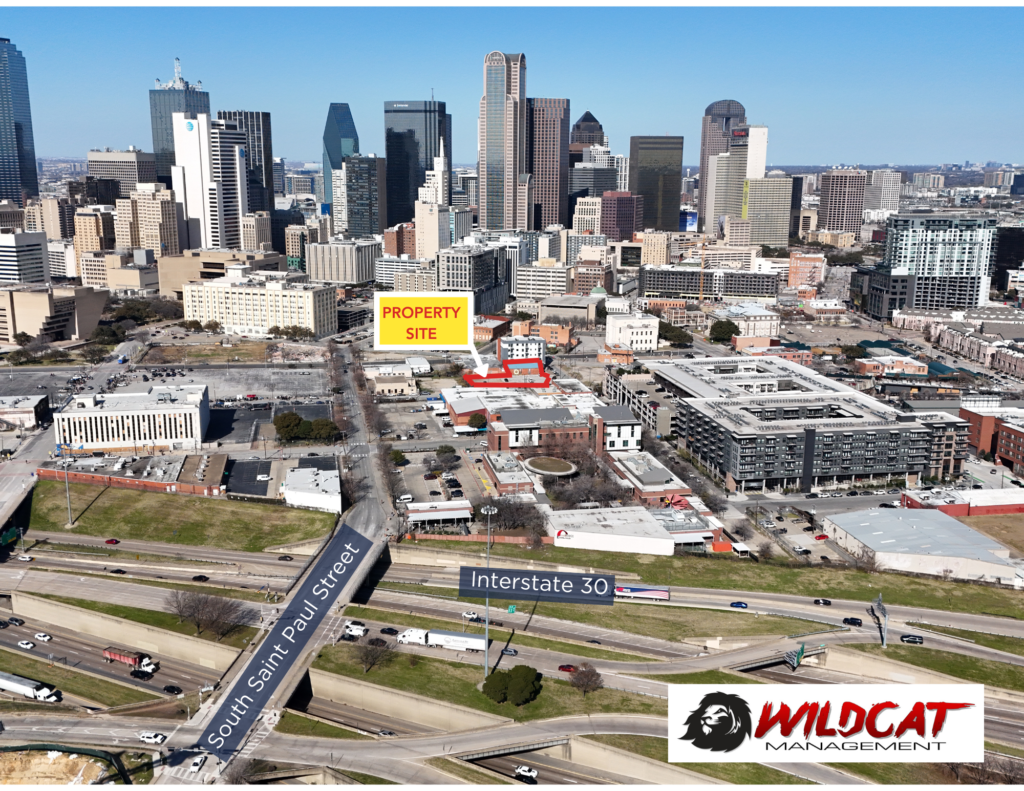
1823 Cadiz benefits from proximity to the convention district and emerging redevelopment momentum to the south of Downtown, while The Purse Building, located in the Government District, stands at the intersection of heritage, tourism movement, policy influence and revitalization. Both are positioned within the broader gravitational pull of the convention center redevelopment zone and sit near catalytic activity expected to shape value creation over the coming decade.
Convention Center Redevelopment Sets the Stage for 2026
The $3+ billion transformation of the Kay Bailey Hutchison Convention Center represents the most visible and consequential catalyst shaping expectations for Downtown Dallas. The redevelopment is intended to modernize Dallas’ convention and large-event economy while also reshaping surrounding areas with improved connectivity, hospitality, retail activation and mixed-use potential.
Even ahead of physical completion, investor conversations are already reflecting what this redevelopment could mean for long-term demand, property positioning and district identity.
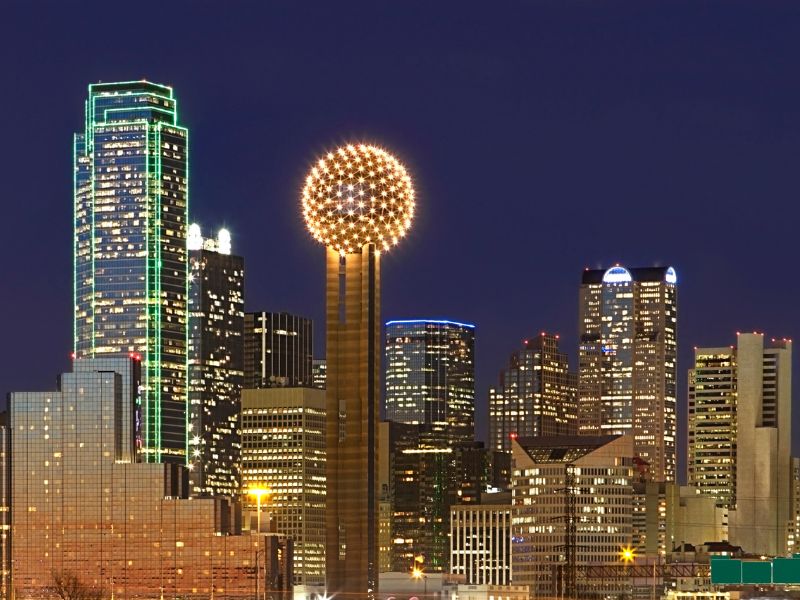
Global Visibility Intensifies Ahead of the 2026 FIFA World Cup
Dallas is entering a period of unprecedented global exposure leading into 2026. With the city serving as a major operational base for the tournament—including global media, administrative operations and corporate engagement—Dallas will remain in the center of international attention for an extended window.
Unlike short-term sporting spikes, the World Cup presence functions more like an economic introduction engine—creating relationships, accelerating corporate conversations, attracting new capital and amplifying Dallas’ global business identity at a level few cities experience.
Financial Infrastructure Strengthens Downtown’s Foundation
Parallel to the physical redevelopment story is an increasingly compelling financial narrative.
Dallas continues to deepen its role as a national financial center with expanding financial service platforms, capital market initiatives and significant commitments from global institutions such as Goldman Sachs growing their regional presence. This strengthening financial infrastructure reinforces workforce stability, high-value job creation and long-term leasing confidence—factors institutional investors weigh heavily when evaluating downtown markets.
Downtown Dallas supports roughly 135,000 workers today, while the broader DFW market remains a national leader in corporate relocations, professional services expansion and headquarters investment. Increasingly, this energy is concentrated within walkable downtown districts—creating density, productivity and resilience.
Major Redevelopment Conversations May Redraw Downtown
Beyond the convention center transformation, multiple long-range redevelopment initiatives are under study that could reshape how Downtown Dallas functions over the next decade.
Strategic development planning connected to major Dallas stakeholders is exploring ways to reimagine underutilized districts in the western portions of Downtown and Reunion areas. Meanwhile, the Dallas Mavericks are evaluating opportunities for a large-scale sports and entertainment district, aligning with national trends where arenas anchor broader economic ecosystems rather than standing alone.
Additionally, Dallas continues to evaluate the future of City Hall—a decision with sweeping implications for civic identity, pedestrian movement, daily workforce flow and surrounding investment.
Importantly, many of these conversations are occurring within close proximity to 1823 Cadiz and within a broader connectivity radius of The Purse Building, positioning both as potentially strategic long-term holds.
Government District & Farmers Market District: Neighborhood Strength Already Building
Rather than being peripheral “adjacent” areas, these are central districts inside Downtown Dallas itself.
- The Government District, where The Purse Building is located, benefits from consistent weekday workforce flow, tourism traffic, heritage appeal and policy infrastructure.
- The Farmers Market District, surrounding 1823 Cadiz, continues to strengthen as a walkable mixed-use destination, with increasing residential, retail, hospitality and lifestyle energy.
This balanced blend of workforce, tourism, civic utility and lifestyle demand creates diversified economic durability—an increasingly critical factor in post-pandemic urban investment evaluation.
Education Anchors Provide Stability and Daily Energy
Education infrastructure continues to reinforce Downtown Dallas’ daytime vitality. Institutions such as Dallas College’s El Centro campus contribute steady pedestrian energy, transit engagement and weekday vibrancy. This stable academic ecosystem supports workforce development and reinforces corporate relocation confidence—another factor institutional investors value highly.
Investor Interest Becomes More Focused
Market conversations suggest institutional capital is now moving beyond curiosity and into active evaluation.
Wildcat Management reports increasing inbound national and international investor interest in both 1823 Cadiz and The Purse Building, driven by their proximity to major catalysts, positioning within evolving districts and alignment with Dallas’ long-term strategic direction.
“Dallas is becoming a city with global gravity, and the response from investors proves it,” said Tanya Ragan, Owner of Wildcat Management. “Interest in properties like 1823 Cadiz and The Purse Building reflects a belief in Downtown’s trajectory—not just as a place to invest, but as a place to build long-term value, community and identity.”
Downtown Dallas 2026 Real Estate Outlook: A Market Moving into Acceleration
As 2026 approaches, Downtown Dallas stands out nationally as one of the few major urban centers where:
- multi-billion-dollar civic infrastructure is advancing,
- financial-sector density is strengthening,
- global visibility is intensifying,
- workforce and population expansion remain strong, and
- multiple transformational redevelopment plans are under serious review.
Rather than simply stabilizing, Dallas is viewed as accelerating.
For institutional investors seeking forward-positioned exposure to a downtown poised for structural transformation, Dallas represents a market to watch closely—and for many, a market worth entering now in anticipation of what the next cycle may bring.