
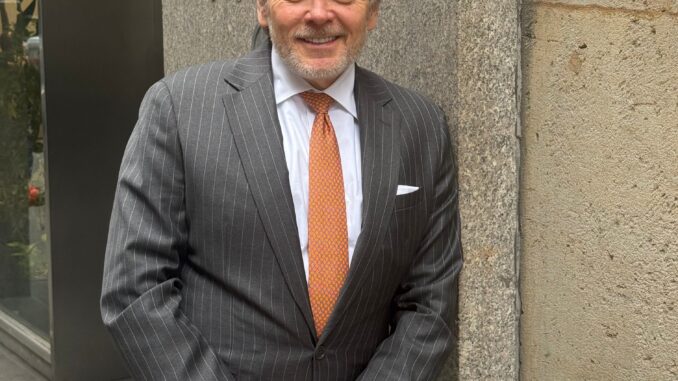
By Bob Knakal
For most of my forty-two years in the real estate brokerage business, a business card was one of the most important tools a professional could possess. You carried them everywhere. You handed them out at meetings, conferences, lunches, networking events, and chance encounters. If someone wanted to learn more about you, they would look at the card. It contained your name, your title, your company, your phone number, and perhaps a brief indication of what you did. That little piece of paper served as your introduction to the world.
Today, the business card has not disappeared, but its importance has been dramatically reduced. In its place, something far more powerful has emerged. Your personal brand has become today’s business card.
When someone hears your name now, they rarely ask for a business card. Instead, they Google you. They visit your LinkedIn profile. They watch your videos. They read your articles. They listen to your podcasts. They review your social media presence. They search for interviews, quotes, testimonials, and evidence of expertise. Before you ever walk into the room, people often know far more about you than they could have learned from a business card after years of interactions.
This shift has fundamentally changed the way business is conducted.
For decades, referrals were often enough. Someone would tell a friend, client, attorney, accountant, or business associate, “You should call Bob Knakal.” That recommendation carried significant weight. Today, referrals remain extremely valuable, but they are often only the beginning of the process. Increasingly, the recipient of that referral immediately begins conducting research. They want to know who you are, what you know, what you have accomplished, and whether you have demonstrated expertise in your field.
In many cases, your personal brand is making the first impression before you ever have the opportunity to make the second one.
This reality creates both opportunities and challenges. The opportunity is that professionals today can build awareness at a scale that was impossible just a generation ago. Through articles, videos, podcasts, newsletters, speaking engagements, and social media, one person can communicate with thousands or even millions of people. The challenge is that if you are not intentionally building your personal brand, others are defining it for you.
One of the biggest misconceptions about personal branding is that it is simply self-promotion. In my experience, that could not be further from the truth. The strongest personal brands are not built by talking about yourself. They are built by consistently providing value to others. People do not follow experts because the experts tell them to. They follow experts because they learn something useful every time they engage with their content.
Over the years, I have come to view myself as being in the information business as much as the real estate business. Long before social media existed, I was creating and distributing content. I was conducting market research, publishing reports, speaking at industry events, writing articles, and sharing information with property owners, investors, and developers. The platforms have evolved dramatically, but the underlying principle has remained exactly the same. If you consistently provide valuable information, people begin to associate your name with expertise and credibility.
That accumulated credibility eventually becomes a competitive advantage.
I have been quoted in the press more than 2,000 times per year. Across various social media platforms, I have more than 135,000 followers. I have appeared on more than 135 podcasts and have been featured on more than twenty magazine covers where a profile article was written about me. While those statistics may sound impressive, they are not the point. The point is that every article, every interview, every podcast appearance, every speech, and every piece of content serves as another digital business card being distributed into the marketplace.
Many professionals still underestimate the importance of this. They believe their work should speak for itself. In a perfect world, perhaps it would. But the reality is that exceptional work that nobody knows about creates fewer opportunities than exceptional work that is widely recognized. Visibility does not replace competence, but competence without visibility often remains undiscovered.
I learned another important lesson several years ago. A strong personal brand can eventually become larger than the institution with which it is associated. In my case, I was fired from JLL three days after The New York Times published a glowing full-page-and-a-quarter profile on me in its Sunday edition. Many people have asked whether those events were related. I have my own opinion. What I know for certain is that personal brands can become extraordinarily powerful assets. They can create opportunities, attract clients, generate trust, open doors, and establish credibility long before a conversation ever begins. My personal brand has grown to the point where I am receiving an incoming lead from a potential seller almost every day. What is that worth to someone who highly values deal origination? It’s extraordinarily powerful.
Companies own logos. Individuals own relationships.
That distinction matters because relationships are ultimately what drive business. People may hire a company, but they trust a person. They may sign a contract with a firm, but they make the decision based upon confidence in an individual. Increasingly, that confidence is established through the personal brand that person has built over time.
In today’s world, your personal brand is often the first meeting, the first handshake, and the first conversation. It is your first impression to the world. It introduces you before you arrive and continues speaking after you leave.
In many ways, it has become far more valuable than the business card ever was.